
The selection of the first three batches of "specialized and innovative" small giant enterprises is cold and clear, and little known. In the first three years, a total of 4762 companies were selected. And the selection of the fourth batch of "specialized and innovative" small giant enterprises has attracted much attention and made a lot of noise. Recently, there are as many as 4,357 selected enterprises in the publicity of relevant units of the Ministry of Industry and Information Technology, reaching a total of about 9,119. This exceeds the author’s judgment in November last year, that is, at least 3,000 companies will be selected in 2022. To some extent, this also reflects a distinctive feature of doing things in China, that is, "sports governance" and "swarming". Therefore, enterprises are required to "catch up early rather than catch up late" for all kinds of favorable policies.
In fact, the Ministry of Industry and Information Technology has recently launched a new selection work, but at present, few people pay attention to it, that is, the selection work around the digital transformation service platform for small and medium-sized enterprises. In the next three years, the Ministry of Industry and Information Technology and the Ministry of Finance plan to support and cultivate about 300 digital transformation service platforms (hereinafter referred to as "service platforms") around 100 sub-sectors to build 4,000-6,000 "small lighthouse" factories.
In particular, from August 28th to September 28th, the Ministry of Industry and Information Technology launched the "National Digital Service Festival for Small and Medium-sized Enterprises", during which a number of initiatives and activities in digital transformation will be launched. All related activities will be summarized and displayed on the website (http://www.828b2b.com/) established and maintained by China Industrial Internet Research Institute.
If you happen to be on the track of digital transformation service providers for small and medium-sized enterprises, don’t miss this opportunity to declare and participate in the "service platform". It’s the same old saying, "catch up early and don’t catch up late." This is not only related to whether you can get the support of the central financial funds (the maximum support is 6 million, and the minimum support is about 3 million), but more importantly, it is an opportunity to show your face to the digital transformation service platform of small and medium-sized enterprises, an opportunity to squeeze into the "national team" and an opportunity to market your products and services, which creates legitimacy and lowers the threshold for market promotion.
Combining with the relevant policy documents, Dr. Zhao Xiangyang will briefly interpret the relevant policy benefits for you, and wish you success in your application. In particular, the deadline for filing is September 12, so we must hurry!
#01
How to treat the overall framework of industrial Internet platform system construction in China? What is the positioning of the "service platform" for the digital transformation of small and medium-sized enterprises in the whole system?
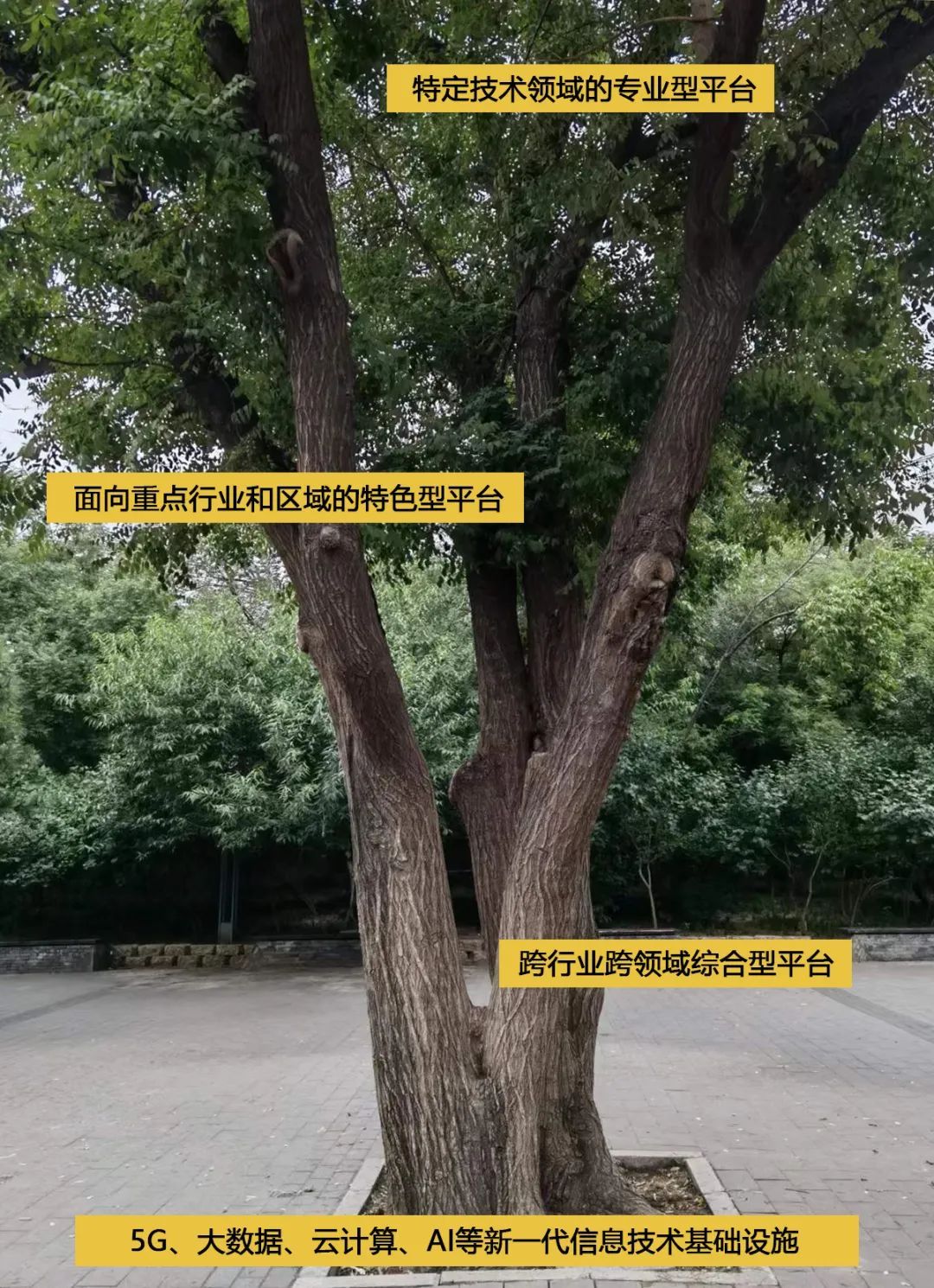
According to the Notice on the Development Plan of Deep Integration of Informatization and Industrialization in the Tenth Five-Year Plan issued by the Ministry of Industry and Information Technology on November 17th, 2021, the construction of industrial Internet platform system in China includes at least three levels.That is, "cross-industry and cross-domain comprehensive platform, characteristic platform for key industries and regions, and professional platform for specific technical fields".The "Little Lighthouse" project launched by the Ministry of Industry and Information Technology and the Ministry of Finance this time belongs to a "professional platform for specific technical fields".
If the relationship between the three levels of platforms can be compared to a big tree. Then, industrial Internet infrastructures such as 5G, AI, big data and cloud computing are tree roots, comprehensive platforms are tree trunks, characteristic platforms are big branches, and professional platforms are small branches.
Up to now, the Ministry of Industry and Information Technology has selected four batches with a total of 28 "double-span" platforms. Including Haier’s COSOMPlat Industrial Internet Platform, Sany Heavy Industry’s Genyun Industrial Internet Platform, Huawei’s FusionPlant Industrial Internet Platform, Tencent’s WeMake Industrial Internet Platform, Baidu AI Cloud and JD.COM Industrial Internet Platforms, and Midea Group’s Meiyun Zhishu, etc. These comprehensive platforms are the trump card of China’s industrial Internet, which is the face of the country and also represents the highest level of China in the field of industrial Internet. Personally, I predict that at the end of the 14th Five-Year Plan, there will be at most 50 large industrial Internet platforms in the first echelon. According to the requirements of the Ministry of Industry and Information Technology, these comprehensive platforms mainly "cover raw materials, equipment manufacturing, consumer goods, electronic information and other industries, as well as R&D and design, manufacturing, operation and maintenance services and other fields, providing services such as industrial resource gathering and sharing, industrial data integration and utilization, industrial production and service optimization and innovation". The key problem is that the digital products provided by these large-scale industrial Internet platforms are too heavy and expensive for many small and medium-sized enterprises to use, and it is also difficult to use.
The second-level digital transformation service platform is a characteristic platform for key industries and regions. In 2021, the Ministry of Industry and Information Technology selected a total of "82 integration management systems", "69 specialized industrial Internet platforms", "31 specialized platforms for improving industrial information security capabilities" and "12 platforms for Sino-German intelligent manufacturing cooperation". Including CRRC Qiqihaha Vehicle Co., Ltd.’ s product collaborative R&D and design capability platform, Ningbo Fangtai Kitchenware Co., Ltd.’ s lean production capability platform, Dayang Group’s digital agile manufacturing and service capability based on the global customer’s clothing customization demand, Fujian Fuqing Nuclear Power Co., Ltd.’ s nuclear power network abnormal behavior analysis and control platform based on traffic big data, Shaanxi Heavy Duty Truck Co., Ltd.’ s commercial vehicle industry typical application, Beijing Benz Automobile Co., Ltd.’ s Sino-German automobile manufacturing equipment intelligent operation and maintenance and standard digital innovation center, etc. These digital service platforms "focus on key industries with good digital foundation and strong driving effect, face areas with high concentration of manufacturing resources and urgent need for industrial transformation, build characteristic platforms for key industries and regions, give play to the role of platform’s knowledge precipitation transformation and resource collaborative allocation, and provide driving role for industrial transformation and upgrading and regional coordinated development". At present, the suppliers of digital platforms focusing on large industries and regions have only been selected once, and a total of 194 suppliers have been selected. Personally, it is predicted that there will be at least 500 in the second echelon at the end of the 14 th Five-Year Plan.
The rest is the professional platform in the third echelon, which requires a service platform that focuses on a certain sub-industry, takes root in a certain area and provides some "small but sharp" digital products and services. They "build professional platforms around specific industrial scenes, focus on cloud simulation, cloud on devices, big data modeling and other specific technical fields, and carry out innovative applications of cutting-edge technologies and industrial mechanism models". Therefore, the purpose of the Notice on Launching the Pilot Work of Financial Support for Digital Transformation of Small and Medium-sized Enterprises (No.22 [2022] of the Ministry of Industry and Information Technology) is to find out how many such service providers are in the market. Where are they all? What kind of products and services are provided? And through various favorable policies and financial support, let them (including the first two digital public service platforms) directly help the best of 4000-6000 small and medium-sized enterprises to carry out digital transformation and build "small lighthouse" enterprises.
#02
Why should the Ministry of Industry and Information Technology and the Ministry of Finance carry out the pilot work of supporting the digital transformation of small and medium-sized enterprises by means of financial support?
Digital transformation and upgrading (that is, the integration of industrialization and informatization) represents the fourth industrial revolution and the future. Which country takes the lead in this field, it is possible to overtake in corners and gain a leading edge. Moreover, this leading edge will produce "Matthew effect", which will further widen the digital gap between leaders and followers, and it will build a moat for the development of enterprises and countries.
Although some leading enterprises in China have been ahead of the world in Industry 4.0. For example, by 2022, there are 103 "lighthouse factories" (black light factories) in the world, of which 37 are in China. However, the 49 million small and medium-sized enterprises in China have a very low starting point in digitalization, and most of them are still in the 1.0 or 2.0 development stage. The digital transformation is difficult and slow, and they can’t keep up with the new wave of industrial revolution.
Small and medium-sized enterprises have many pain points in digital transformation, including "dare not turn", "unwilling to turn", "will not turn" and "cannot turn". The main reason is the lack of matching funds, dare not invest; I can’t see the transformation effect clearly, feel confused, hesitate, and dare not turn; There is a lack of products and services suitable for the digital transformation of small and medium-sized enterprises. Many digital transformation products are mainly designed for large and medium-sized enterprises, and they can’t afford to use them. There is also a lack of digital transformation service providers in the market who are deeply involved in sub-sectors and thoroughly understand the industrial knowledge of this industry, and the products and needs do not match; There is a lack of practical operators in the enterprise, and the digital transformation is superficial, aborted halfway, or difficult to land.
Therefore, it needs the overall guidance of the government and some financial support. More importantly, it is necessary to create a market environment suitable for the digital transformation of small and medium-sized enterprises, and a large number of service platforms have been set up for the digital transformation of small and medium-sized enterprises.
#03
What is the relationship between digital transformation and the development of specialized and new enterprises?
Specialization, innovation and innovation of large, medium and small enterprises are two sides of an organic whole. And digital transformation is the key to get through the innovation of specialization, innovation and integration of large, medium and small enterprises.
At the beginning of May, 2022, 11 ministries and commissions jointly issued "On Carrying out" Joint Action "to Promote the Integration and Innovation of Large, Medium and Small Enterprises (2022-2025)" (hereinafter referred to as "Joint Action"), which put forward the "Seven Chain Plan", and one of the most important measures was to promote data integration driven by digitalization. It is required to give full play to the digital traction role of large enterprises, improve the digital level of small and medium-sized enterprises and the supporting role of industrial Internet.
From the perspective of inter-enterprise cooperation, only when some key data and information can be shared can trust and credit relationships be established between enterprises, and small and medium-sized enterprises can be deeply embedded in the industrial chain and industrial ecology created by leading enterprises, forming the effect of reinforcing chains and strengthening chains.
The development of specialized new enterprises and innovative small and medium-sized enterprises needs a supporting innovation ecosystem, and one of the important environmental factors is to have professional service providers around the digital transformation of small and medium-sized enterprises. The "Little Lighthouse" program focuses on supporting digital service providers who are deeply involved in a certain sub-sector and region. They can extract, software and cloud the scattered, implicit and precipitated industry knowledge. Therefore, the government hopes that they will dig deep into sub-sectors and introduce some "small, quick and accurate" applications (miniaturization, speediness, lightweight and precision) that SMEs can afford and use well. At the same time, the government also encourages large-scale industrial Internet platform enterprises to further increase the leading role in the digital transformation of small and medium-sized enterprises and promote the integration and innovation of large and medium-sized enterprises.
Only by enriching the innovation ecosystem of small and medium-sized enterprises can we cultivate more innovative small and medium-sized enterprises with high quality and specialized new enterprises. Therefore, this transformation pilot policy is essentially a further upgrade and deepening of the gradient cultivation of high-quality small and medium-sized enterprises, and there is a synergistic effect with other related policies. I think the idea of this policy design is clear, honest and innovative, and has strong operability.
From the perspective of international comparison, the "Little Lighthouse" plan launched by the two ministries also conforms to the international practice of developed countries in promoting the digital transformation of small and medium-sized enterprises. In Germany, for example, they also supported a large number of third-party professional service organizations like Flawn Hof and Shi Taibai through specific industrial policies and the combination of financial allocation and self-financing by enterprises, helping small and medium-sized enterprises to carry out industrial upgrading and digital transformation.
Imagine, if we use direct award-winning funds (like the 10 billion award-winning funds for state-level key small giants), on the one hand, it is suspected of violating the principle of neutrality in market competition, and on the other hand, pepper-sprinkling incentives cannot produce radiation-driven effects, and it is impossible to improve the ability of these state-level key small giants to benefit other small and medium-sized enterprises and play a "driving role" effect.
#04
What are the highlights of the "Little Lighthouse" plan of the two ministries on promoting the pilot work of digital transformation of small and medium-sized enterprises?
In my opinion, the first is the combination of government and effective market.This pilot work requires "the government to make up a little, the platform to make a little, and the enterprise to make a little", and the risks are shared, but the final benefits are mainly the market players. Central government ministries and commissions carry out policy design and macro-guidance. According to the current situation of local industry development, local governments select sub-sectors with great potential, while digital service platforms actively explore pilot enterprises with the willingness of digital transformation, thus reducing the market behavior of being too scattered in resources and lacking a sense of direction, and at the same time fully considering the actual situation of local and enterprises, following the three-in-one principle of "the market has demand, the platform has the ability and the enterprises have the will", which is a beneficial exploration of the new national system.
Secondly, the principle of "pilot first, then promote" has always been a magic weapon for China’s reform and opening up, and it also conforms to the popular core idea of lean entrepreneurship in recent years.In the next three years, around 100 sub-industries, about 300 public service digital platforms will be formed, and 4,000-6,000 "small lighthouse" enterprises will be built, hoping to achieve the effect of "learning from others" and "trying to make a batch and bringing up one piece".
In particular, this pilot work requires reproducibility and easy popularization. "For the common application scenario solutions with advanced technology, outstanding benefits and good corporate response, it is necessary to increase replication and promotion in the province. Provinces should also promote a wider range of promotion and application by organizing learning exchanges and on-site observation. " If this "Little Lighthouse" project can be successfully implemented. It is optimistically estimated that the digital transformation of small and medium-sized enterprises in China will be smoother and the speed will be significantly improved.
The selection of sub-sectors and pilot enterprises is carefully selected and focused.The policy clearly requires that "small and medium-sized enterprises in key areas of manufacturing and key links of industrial chain should be regarded as the key direction of digital transformation pilot, and support should be increased for small and medium-sized enterprises with urgent needs for digital transformation, huge development potential and obvious economic and social benefits". Moreover, some key sub-sectors are further defined in the appendix of the document, which requires that "pilot industries should choose characteristic industrial clusters of sub-sectors with great potential for upgrading", and pilot enterprises should also be representative ("pilot enterprises should choose small and medium-sized enterprises with different scales and development levels"), so as to ensure that subsequent digital transformation schemes can be replicated and promoted.
The combination of common problems and individual problems in the industry.Digital service platform needs to take root in sub-industries, extract the scattered knowledge and wisdom scattered in the minds of entrepreneurs and employees, form norms and standards, and then copy and promote them on a large scale. Therefore, the policy requires the service platform to identify the common problems in the industry, organize experts in information technology, industry technology, process manufacturing, enterprise management, etc., go deep into the industry and enterprise research, "portrait" the enterprise, clarify the mechanism, process, technology, identify the pain points, difficulties, blocking points and systematically establish the common problems and needs of the enterprise, and form an engineering sample contract and operation specification that can meet the common and individual needs of small and medium-sized enterprises in sub-sectors.
The main bodies to implement the "Little Lighthouse" plan are digital transformation service platforms and industrial Internet platform-based enterprises, but the ultimate goal is to build "Little Lighthouse" enterprises.The digital service platform is just a tool. The policy requires that "efforts should be made to compact the responsibility of the service platform and implement the transformation according to the solution and service contract. Do a good job in the practical training of operational skills, so that pilot enterprises can use it, use it well, and use it effectively. " Therefore, if properly implemented, this is a matter of killing two birds with one stone. Moreover, in a few years, the "Little Lighthouse" enterprise will also be an important track.
#05
Do you have any suggestions on the implementation of this policy?
About the digital service platform.Because there is no more than 6 million bonus funds for the service platform selected in the pilot program (each sub-sector serves at least 10 enterprises and no more than 20 enterprises, and the bonus is 30% of the actual transformation cost, with a maximum of 300,000 yuan), it can be expected that this work should be strongly supported by the majority of small and medium-sized enterprises and local governments.
The key question is whether there are enough digital transformation service platforms with certain capabilities in the current market, and whether their industry background and knowledge and experience can provide practical help for the digital transformation of small and medium-sized enterprises?If not, how can these service platforms quickly upgrade their capabilities and resources in a short time to meet the needs of the country? This requires the relevant departments to openly select the best service platform, strictly control the quality, and at the same time balance the mission of cultivating the service platform itself. Only by cultivating a sufficient number of digital transformation service providers can we finally help the digital transformation of small and medium-sized enterprises.
About specialized and innovative SMEs and innovative SMEs. The actual effect of digital transformation may take two to three years to see. As one of the ways of organizational change, digital transformation may cause pain in the short term, interfere with "normal" production and business activities, and even reduce the production efficiency of enterprises. Therefore, it is necessary for the top leaders of enterprises to be fully prepared. We must deeply realize that digital transformation is the work of the top leader, and we need to change the thinking of enterprise management from top to bottom, and learn new business ideas, knowledge and work skills. Only when digitalization becomes the usual behavior of most people, even everyone, can we really see the actual results.
In addition, as a pilot enterprise supported by government financial funds, once its transformation is successful, it should hold an open mind, lead the backward with the advanced, and share its successful experience and lessons with other enterprises in the same industry. This involves how to keep business secrets. Therefore, it is necessary to be both open and confidential, and how to handle the relationship between them is a very challenging problem.
About local governments. We encourage local governments to combine local actual conditions, let a hundred flowers blossom and implement their work. Especially in the eastern coastal provinces and cities, in terms of digital transformation, we can be more courageous, more vigorous and take more measures, and try first. The less developed provinces and cities in the mainland can be a little more conservative if they don’t have the ability and funds in this area, but they must keep their eyes open, study hard and imitate the experience of developed regions, take fewer detours, and do a good job in the follow-up work of rapid replication and promotion. Less detours and rapid replication and promotion are to save the cost of transformation and help to slow down the imbalance of regional development.
#06
What specific suggestions do you have for those small digital transformation service providers about this application?
1) Seize the opportunity, catch up early and not catch up late.The deadline for this declaration is September 12th. At present, the application work of the relevant departments of various provinces and cities on this project is basically "completely blind" and I don’t know how to operate it. Therefore, starting early will have a leading edge. Even if this year’s declaration is unsuccessful, we will fight again next year.
2) Take the initiative to contact the competent department of small and medium-sized enterprises in local provinces.Find out which department is responsible for reviewing materials and recommending. Communicate in advance, understand the situation of other competitors and objectively evaluate your own strength. There are only five places in each province and city. "Know yourself and know yourself, and you will be invincible."
3) Deeply understand relevant policies and grasp the logic behind them.The purpose of writing this article is to help these service platforms understand the deep logic of policy design.
4) Comprehensively sort out the enterprise cases that they have served.We must focus on the key points, combine points with areas, and clearly position and focus ourselves on a certain sub-industry, a certain province, or a certain digital product (that is, emphasize embeddedness). Products and services should emphasize "small and sharp" rather than "small and comprehensive". For each enterprise case you have served, establish a separate file, objectively and accurately describe the previous digitalization level, difficulties and pain points of the enterprise case, the advantages and values of the solutions you provided, and the value generated after digital transformation. In particular, it is necessary to explore the replicability, maturity and popularization of the case.
5) Vigorously tap the potential customers in the future (the cultivation targets of "Little Lighthouse" enterprises).In particular, the provincial-level "specialized and innovative" enterprises and the "specialized and innovative" little giant enterprises of the Ministry of Industry and Information Technology (except those enterprises that have won the national key small giant enterprise award). Promote the benefits of this policy to them and encourage them to become a member of the "Little Lighthouse" program. Remember, at least 10-20 potential customers (with a median of 15) should be collected and their digital level should be evaluated.
6) Evaluation and diagnosis on the digitalization level of the target customer enterprise.The Evaluation Table of Digitalization Level of Small and Medium-sized Enterprises mentioned in Appendix II of the document has not been officially released yet. Attachment 5 "Performance Evaluation Target Table for Digital Transformation of XX Industry in XX Province in 5《202X" is mainly designed for industrial parks or characteristic industrial clusters, and is not suitable for evaluating the digital level of individual SMEs. Please pay attention to the relevant websites of the Ministry of Industry and Information Technology or China Industrial Internet Research Institute, and the relevant evaluation scale is estimated to be published in the next two or three days.
7) The application materials must be down-to-earth, accurate and reliable, and can stand the review, and cannot be falsified.However, we should also understand that the purpose of this pilot project is to devote ourselves to the future cultivation work, rather than the final examination. Therefore, it is acceptable to publicize and imagine moderately for the future. The difficulty lies in how to combine previous work and how to tell your own story well.
Graphic editor | Adele
Cover image source Pixabay