With the advent of the fourth industrial revolution, artificial intelligence is attracting unprecedented attention. Just like the steam engine in age of steam and the generator in the electric age, artificial intelligence technology is becoming a decisive factor to push mankind into the intelligent age. More and more enterprises are actively applying artificial intelligence to empower their business and accelerate the process of digital intelligence transformation.
"AI represents the arrival of a new era. AI is giving birth to a new era of global growth. In the new era, computing power plays a more important role, and everyone will usher in a better future. For developers, this will bring huge social and commercial opportunities to create more possibilities, create solutions to major challenges in the world, and benefit everyone on the planet. "At last week’s Intel on Technology Innovation Conference, Pat Kissinger, CEO of Intel Corporation, described the opportunities of the times brought by AI.
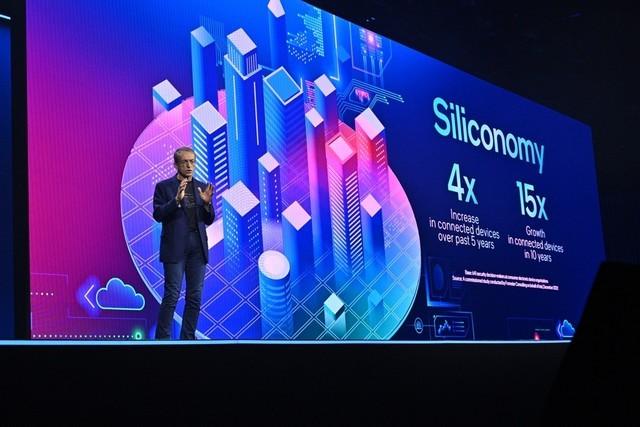
It is not difficult to see that AI, as a new catalyst for economic growth, is promoting the development of the whole "core economy". The so-called "core economy" refers to the growing economic form driven by chips and software. Nowadays, chips have formed an industry with a scale of up to 574 billion US dollars, and it drives the global technology economy of about 8 trillion US dollars.
At this Intel on Technology Innovation Conference, Intel also introduced a series of technologies and hardware, covering the client to the edge, aiming to make AI more widely used in all workloads from the network to the cloud.
AI PC, the future PC
With the popularity of generative AI last year, the whole world has seen the infinite possibilities of AI in the future. As the closest hardware terminal equipment to human beings, the computer industry has also ushered in a new round of regeneration opportunity driven by the upsurge of AI. At this Intel on Technology Innovation Conference, Kissinger said that "AI will fundamentally change, reshape and reconstruct the PC experience through the close cooperation between cloud and PC, and release people’s productivity and creativity. We are moving towards a new era of AI PC. "
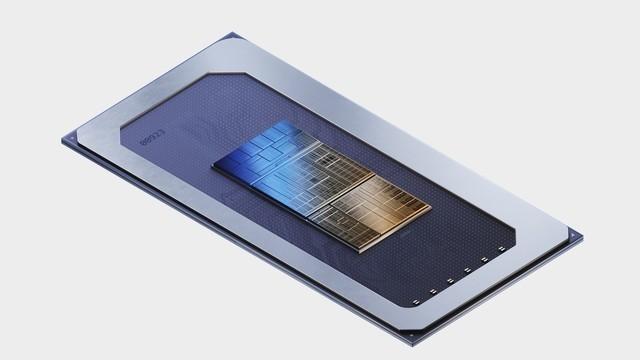
The brand-new AI PC era will soon be displayed on Intel’s Intel Core Ultra processor code-named Meteor Lake, which was launched by Intel on December 14th. The processor is equipped with Intel’s first integrated neural network processor (NPU) to bring energy-efficient AI acceleration and local reasoning experience to the PC.
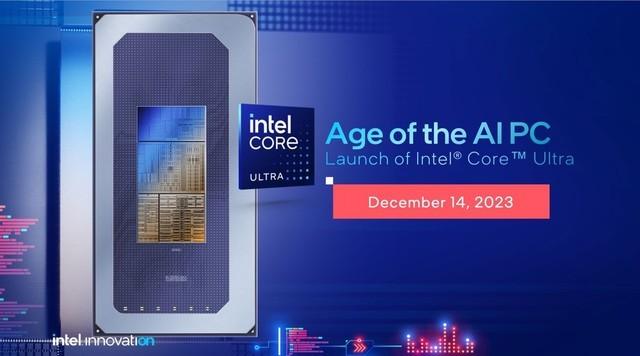
As an important turning point of Intel’s client processor roadmap, Core Ultra processor is the first processor designed with client core using Foveros packaging technology. In addition to the significant improvement in performance/power ratio of NPU and Intel 4 process nodes, this processor also brings the performance of discrete graphics card level by integrating Intel Ruixuan graphics card.
On the day of Intel On Innovation Conference, Kissinger showed many usage scenarios of AI PC, and Acer Chief Operating Officer Gao Shuguo introduced Acer laptop with Core Ultra processor. Gao Shuguo said: "We cooperated with the Intel team to jointly develop a set of Acer AI library through the OpenVINO toolkit to make full use of the Intel Core Ultra platform, and also jointly developed the AI library, and finally brought this product to users."
Help enterprises release AI value with high cost performance.
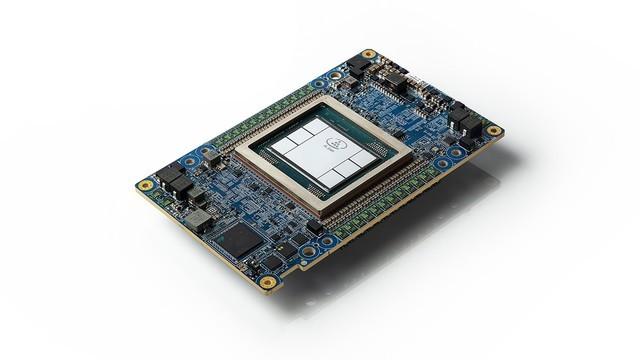
Although the importance of AI is well known, for most enterprises, the rising GPU price makes it somewhat unrealistic to deploy AI on a large scale, and Habana Gaudi2 launched by Intel in China earlier is expected to be a better solution for deploying AI on a large scale.
The recently released MLPerfAI reasoning performance test results further prove Gaudi2′ s excellent performance-to-price ratio. From the performance benchmark test results of MLPerf reasoning v3.1 for 6 billion parameter large language model and computer vision and natural language processing model GPT-J, Gaudi2′ s test results verify its quite competitive performance, especially NVIDIA H100 shows only a slight performance advantage of 1.09 times (server) and 1.28 times (offline) compared with Gaudi2. Kissinger also announced that a large AI supercomputer will be built entirely with Intel Xeon processors and 4,000 Intel Gaudi2 accelerators, and Stability AI is its main customer.
In addition to Gaudi2, Intel’s Xeon product portfolio can also effectively reduce the entry threshold of AI. At the Intel on Innovation Conference, Zhou Jingren, chief technology officer of Alibaba Cloud, explained how Alibaba used the fourth-generation Intel Xeon scalable processor with built-in AI accelerator in its generative AI and large language model, namely "Alibaba Cloud Tongyi Thousand Questions Model". Zhou Jingren said that Intel technology "greatly shortened the response time of the model, with an average acceleration of three times".
Intel also revealed that the fifth generation Intel Xeon processor will be released on December 14th, when it will improve the performance and storage speed for global data centers with the same power consumption. In addition, SierraForest, an energy-efficient E-core processor, will be launched in the first half of 2024. Compared with the fourth generation Xeon, this processor with 288 cores is expected to increase the rack density by 2.5 times and the performance per watt by 2.4 times. Following the release of Sierra Forest is Granite Rapids, a P-core processor with high performance. Compared with the fourth generation Xeon, its AI performance is expected to be improved by 2 to 3 times.
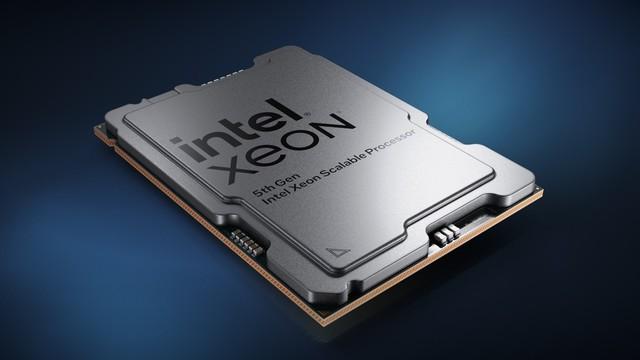
In 2025, the next generation Xeon energy-efficient core processor code-named Clearwater Forest will be manufactured based on Intel 18A process nodes.
Help developers promote the AI era
For the booming AI era, the importance of developers is self-evident. At this Intel on Innovation Conference, Intel also announced a series of technologies and updates for developers:
The first isIntel Developer Cloud PlatformThe platform can help developers to use the latest Intel software and hardware innovations for AI development (including the Intel Gaudi2 accelerator for deep learning) and authorize them to use Intel’s latest hardware platforms, such as the fifth-generation Intel Xeon scalable processor and the Intel data center GPU Max series 1100 and 1550. When using Intel Developer Cloud Platform, developers can build, test and optimize AI and scientific computing applications, and they can also run AI training, model optimization and reasoning workloads from small scale to large scale to achieve high performance and efficiency. Intel Developer Cloud Platform is based on oneAPI, an open programming model that supports multi-architecture and multi-vendor hardware, and provides developers with hardware choices, and gets rid of proprietary programming models to support accelerated computing, code reuse and meet portability requirements.
Followed byIntel Release OpenVINO Toolkit Version 2023.1The official release of, as Intel’s AI reasoning and deployment running tool suite, OpenVINO provides developers with quality choices on client and edge platforms. This version includes pre-training models optimized for integration across operating systems and various cloud solutions, including multiple generative AI models, such as Llama2 model of Meta. Companies including ai.io and Fit:Match showed how they use OpenVINO to speed up their applications: ai.io uses OpenVINO to evaluate athletes’ performance; Fit:Match revolutionized the retail and health industries through OpenVINO to help consumers find clothes that fit better.
Finally,Strata project and edge native software platformThe platform will be launched in 2024, providing modular components, quality services and product support. This is a way to scale out the infrastructure required for intelligentedge and hybridAI artificial intelligence, and integrate vertical applications of Intel and third parties into an ecosystem. This solution will enable developers to build, deploy, run, manage, connect and protect distributed edge infrastructure and applications.
Four years and five process nodes have been steadily advanced, and Intel has promoted the sustainable development of chip technology.
At last year’s Intel 2022 investor conference, Intel announced the process development plan for the next few years, that is, to achieve "five process nodes in four years". At present, Intel 7 has achieved mass production, Intel 4 is ready for production, and Intel 3 is also progressing as planned, with the goal of the end of 2023.
At this Intel on Innovation Conference, Kissinger also showed the first batch of test chips of Intel Arrow Lake processor based on Intel 20A process nodes. Arrow Lake will be launched for the client market in 2024. Intel 20A will be the first process node to apply Power Via back-side power supply technology and a new all-around gate transistor Ribbon FET. Intel 18A process node, which will also adopt these two technologies, is also progressing as planned, with the goal of the second half of 2024.
In terms of materials and packaging technology, Intel has also brought innovations. Specifically, glass substrates will be launched in the late 2020s, which will continue to increase the number of transistors in a single package to help meet the needs of data-intensive high-performance workloads such as AI, and will continue to promote Moore’s Law after 2030.
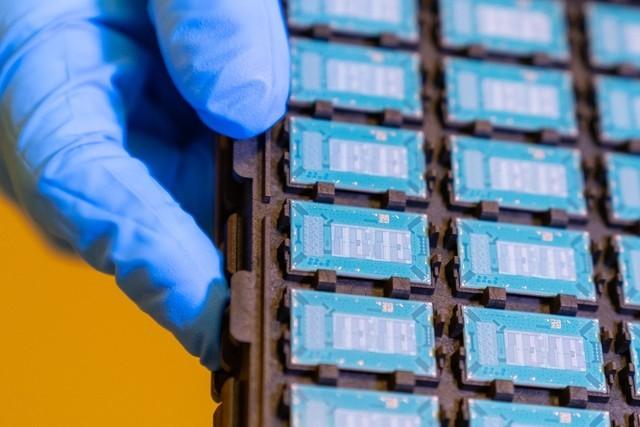
In addition, Intel also demonstrated the test chip package based on Universal Open Specification for Core-Particle High Speed Interconnection (UCIe). Kissinger said that the next wave of Moore’s Law will be driven by multi-core packaging technology. If open standards can solve the obstacles of IP integration, it will soon become a reality. The UCIe standard, which was initiated last year, will enable pellets from different manufacturers to work together, thus meeting the expansion requirements of different AI workloads with new chip designs. At present, UCIe open standard has been supported by more than 120 companies.
Although the penetration of the Internet and computing power is ubiquitous today, it is far from enough. The arrival of AI has brought new possibilities for the development of computing power. It is foreseeable that, as the development trend of science and technology in the next two or three decades, artificial intelligence will inject innovation vitality into more industries, and promote the society to use new technologies to realize innovation in production mode, operation mode, product service and many other aspects. A series of software and hardware updates and releases brought by Intel at this conference not only describe the imagination of a beautiful AI future for everyone, but also show its own technical strength in an all-round way.